

admin
About admin
Posts by :

Dive Into Wellness: The Benefits of Swimming at Silver City’s Municipal Pool
As the sun begins to cast its golden rays over Silver City, the inviting shimmer of the Municipal Swimming Pool beckons both young and old. The gentle lapping of water against the pool’s edge and the rhythmic splashes of swimmers create a symphony that calls out to all who seek both recreation and fitness. With the grand opening scheduled for June 3rd, 2024, there’s no better time to dive into a healthier lifestyle. Here’s why swimming at the Silver City Municipal Pool should be on your summer agenda.
Embrace the Summer Schedule
General Swim:
- Monday – Friday: 1:00 p.m. to 5:00 p.m. ($4.00/person)
- Saturday: 11:00 a.m. to 5:00 p.m. (Free to the Public)
- Sunday: 11:00 a.m. to 5:00 p.m. ($4.00/person)
Imagine plunging into the cool, refreshing water after a long day, the sun warming your back as you glide through the pool. On Saturdays, the pool is a hub of community activity, offering free admission to all, making it the perfect day for families to gather and enjoy the sparkling waters without any cost.
Night Swim:
- Tuesday – Thursday: 6:00 p.m. to 9:00 p.m. ($4.00/person)
As twilight settles over Silver City, the pool transforms into an oasis of calm. The night swims offer a unique opportunity to unwind under the stars, the water’s surface reflecting the night sky, providing a serene and almost magical experience.
Lap Swim:
- Monday – Friday: 11:30 a.m. to 1:00 p.m. ($4.00/person)
For those seeking a rigorous workout, the midday lap swim is an ideal time. Picture yourself slicing through the water, each stroke energizing your body, and each breath syncing with your movements, strengthening your core and boosting your heart health.
Seasonal Pool Passes:
- 20 Punch Card: $60.00
- Individual Season Pass: $150.00
- Family Package (4 individual season passes): $450.00
Discover the Many Benefits of Swimming
Weight Loss Tool: Swimming is an excellent way to lose weight without the monotony of traditional exercises. A 40-minute session four times a week can shed excess pounds, and strokes like the butterfly can burn up to 800 calories an hour. Feel the exhilaration as you move through the water, knowing each lap is bringing you closer to your fitness goals.
Core Workout: Swimming engages your core, helping to tone and strengthen those elusive abdominal muscles. Freestyle swimmers, in particular, will find that maintaining a streamlined position in the water requires a strong core, gradually sculpting a six-pack with regular practice.
Speeds Up Recovery: As a low-impact exercise, swimming is perfect for those recovering from injuries or dealing with chronic pain. The buoyancy of the water supports your body, allowing you to stretch and move without putting pressure on sore joints and muscles. Imagine the soothing embrace of the water as it helps to heal and relax your body.
Improves Flexibility: Swimming stretches and tones neglected areas of your body, promoting overall flexibility. The gentle resistance of the water helps you to stretch further and more comfortably, improving your range of motion over time.
No Age Limit: From babies to seniors, swimming is an inclusive activity. It aids in the development of infants and supports bone health in older adults. It’s a sport that brings people of all ages together, fostering community and well-being.
Boosts Heart Health: Swimming is a total body workout that strengthens your cardiovascular system. The resistance of the water makes your heart work harder, improving circulation and reducing blood pressure. As you push through the water, you’re also pushing towards a healthier heart.
Relieves Stress and Alleviates Anxiety: The rhythmic nature of swimming, combined with the calming effects of water, provides significant stress relief. Each stroke through the water is a chance to clear your mind and release tension. For those with anxiety or depression, swimming can be a mindful exercise that soothes both body and soul.
Improves Breathing: Swimming enhances lung capacity and breathing efficiency. It’s particularly beneficial for those with asthma, as the controlled breathing techniques required can help open up the lungs and reduce symptoms.
Fun and Social: Swimming isn’t just a workout; it’s fun! Whether you’re perfecting your stroke or enjoying a playful splash with friends, the pool is a place of joy and connection. Waterproof earphones can even accompany your swim with your favorite tunes.
Contact Information and Registration
To experience all these benefits and more, visit the Silver City Municipal Pool located at:
Address: 2700 N Silver St, Silver City, NM 88061
Hours: Open ⋅ Closes 9 PM
Phone: (575) 388-4165
Note: Hours updated by phone call 1 week ago.
Learn to Swim Program:
- Registration: Begins on Wednesday, June 5th at 9:00 a.m. at the Municipal pool.
- Cost per child: $45.00
- Cost per sibling: $40.00
- Session I: June 10th – June 13th & June 17th – June 20th
- Session II: July 8th – July 11th & July 15th – July 18th
Pool Parties:
- Start Date: June 3rd
- Contact: 388-4165 to schedule a date.
- Available Days: Friday, Saturday, and Sunday from 6:00 p.m. to 9:00 p.m.
- Cleaning Deposit: $50.00 (Refundable)
- Rental/Staff Fees:
- 1 to 25 persons: $85.00/hr.
- 26 to 50 persons: $95.00/hr.
- 51 to 150 persons: $110.00/hr.
- 151 to 250 persons: $125.00/hr.
- Non-profit Rate: $85.00/hr.
Join us at the Silver City Municipal Pool this summer and immerse yourself in the refreshing, invigorating, and joyous world of swimming. Dive in and discover the myriad benefits that await beneath the surface!

New catalyst unveils the hidden power of water for green hydrogen generation
Hydrogen is a promising chemical and energy vector to decarbonize our society. Unlike conventional fuels, hydrogen utilization as a fuel does not generate carbon dioxide in return. Unfortunately, today, most of the hydrogen that is produced in our society comes from methane, a fossil fuel. It does so in a process (methane reforming) that leads to substantial carbon dioxide emissions. Therefore, the production of green hydrogen requires scalable alternatives to this process.
Water electrolysis offers a path to generate green hydrogen which can be powered by renewables and clean electricity. This process needs cathode and anode catalysts to accelerate the otherwise inefficient reactions of water splitting and recombination into hydrogen and oxygen, respectively. From its early discovery in the late 18th century, the water electrolysis has matured into different technologies. One of the most promising implementations of water electrolysis is the proton-exchange-membrane (PEM), which can produce green hydrogen combining high rates and high energy efficiency.
To date, water electrolysis, and in particular PEM, has required catalysts based on scarce, rare elements, such as platinum and iridium, among others. Only a few compounds combine the required activity and stability at the harsh chemical environment imposed by this reaction. This is specially challenging in the case of anode catalysts, which have to operate at highly corrosive acidic environments — conditions where only iridium oxides have shown stable operation at the required industrial conditions. But iridium is one of the scarcest elements on earth.
In search for possible solutions, a team of scientists has recently taken an important step to find alternatives to iridium catalysts. This multidisciplinary team has managed to develop a novel way to confer activity and stability to an iridium-free catalyst by harnessing so far unexplored properties of water. The new catalyst achieves, for the first time, stability in PEM water electrolysis at industrial conditions without the use of iridium.
This breakthrough, published in Science, has been carried out by ICFO researchers Ranit Ram, Dr. Lu Xia, Dr. Anku Guha, Dr. Viktoria Golovanova, Dr. Marinos Dimitropoulos, Aparna M. Das and Adrián Pinilla-Sánchez, and led by Professor at ICFO Dr. F. Pelayo García de Arquer; and includes important collaborations from the Institute of Chemical Research of Catalonia (ICIQ), The Catalan Institute of Science and Technology (ICN2), French National Center for Scientific Research (CNRS), Diamond Light Source, and the Institute of Advanced Materials (INAM).
Dealing with the acidity
Combining activity and stability in highly acidic environment is challenging. Metals from the catalyst tend to dissolve, as most materials are not thermodynamically stable at low pH and applied potential, in a water environment. Iridium oxides combine activity and stability at these harsh conditions, and that is why they are the prevalent choice for anodes in proton-exchange water electrolysis.
The search for alternatives to iridium is not only an important applied challenge, but a fundamental one. Intense research on the look for non-iridium catalysts has led to new insights on the reaction mechanisms and degradation, especially with the use of probes that could study the catalysts during operation combined with computational models. These led to promising results using manganese and cobalt oxide-based materials, and exploiting different structures, composition, and dopants, to modify the physicochemical properties of the catalysts.
While insightful, most of these studies were performed in fundamental not-scalable reactors and operating at softer conditions that are far from the final application, especially in terms of current density. Demonstrating activity and stability with non-iridium catalysts in PEM reactors and at PEM-relevant operating conditions (high current density) had to date remained elusive.
To overcome this, the ICFO, ICIQ, ICN2, CNRS, Diamond Light Source and INAM researchers came up with a new approach in the design of non-iridium catalysts, achieving activity and stability in acid media. Their strategy, based on cobalt (very abundant and cheap), was quite different to the common paths.
“Conventional catalyst design typically focuses on changing the composition or the structure of the employed materials. Here, we took a different approach. We designed a new material that actively involves the ingredients of the reaction (water and its fragments) in its structure. We found that the incorporation of water and water fragments into the catalyst structure can be tailored to shield the catalyst at these challenging conditions, thus enabling stable operation at the high current densities that are relevant for industrial applications,” explains Professor at ICFO, García de Arquer. With their technique, consisting in a delamination process that exchanges part of the material by water, the resulting catalyst present as a viable alternative to iridium-based catalysts.
A new approach: the delamination process
To obtain the catalyst, the team looked into a particular cobalt oxide: cobalt-tungsten oxide (CoWO4), or in short CWO. On this starting material, they designed a delamination process using basic water solutions whereby tungsten oxides (WO42-) would be removed from the lattice and exchanged by water (H2O) and hydroxyl (OH–) groups in a basic environment. This process could be tuned to incorporate different amount of H2O and OH– into the catalyst, which would then be incorporated onto the anode electrodes.
The team combined different photon-based spectroscopies to understand this new class of material during operation. Using infrared Raman and x-rays, among others, they were able to assess the presence of trapped water and hydroxyl groups, and to obtain insights on their role conferring activity and stability for water splitting in acid. “Being able to detect the trapped water was really challenging for us,” continues leading co-author Dr. Anku Guha. “Using Raman spectroscopy and other light-based techniques we finally saw that there was water in the sample. But it was not “free” water, it was confined water”; something that had a profound impact on performance.
From these insights, they started working closely with collaborators experts in catalyst modelling. “The modeling of activated materials is challenging as large structural rearrangments take place. In this case the delamination employed in the activation treatment increases the number of active sites and changes the reaction mechanism rendering the material more active. Understanding these materials requires a detailed mapping between experimental observations and simulations,” says Prof. Núria López from ICIQ. Their calculations, led by a leading co-author Dr. Hind Benzidi, were crucial to understand how the delaminated materials, shielded by water, were not only thermodynamically protected against dissolution in highly acidic environments, but also active.
But, how is this possible? Basically, the removal of tungsten-oxide leaves a hole behind, exactly where it was previously located. Here is where the “magic” happens: water and hydroxide, which are vastly present in the medium, spontaneously fill the gap. This in turn shields the sample, as it renders the cobalt dissolution an unfavorable process, effectively holding the catalyst components together.
Then, they assembled the delaminated catalyst into a PEM reactor. The initial performance was truly remarkable, achieving higher activity and stability than any prior art. “We increased five times the current density, arriving to 1 A/cm2 — a very challenging landmark in the field. But, the key is, that we also reached more than 600 hours of stability at such high density. So, we have reached the highest current density and also the highest stability for non-iridium catalysts,” shares leading co-author Dr. Lu Xia.
“At the beginning of the project, we were intrigued about the potential role of water itself as the elephant in the room in water electrolysis,” explains Ranit Ram, first author of the study and instigator of the initial idea. “No one before had actively tailored water and interfacial water in this way.” In the end, it turned out to be a real game changer.
Even though the stability time is still far from the current industrial PEMs, this represents a big step towards making them not dependent on iridium or similar elements. In particular, their work brings new insights for water electrolysis PEMs design, as it highlights the potential to address catalyst engineering from another perspective; by actively exploiting the properties of water.
Towards the industrialization
The team has seen such potential in the technique that they have already applied for a patent, with the aim of scaling it up to industry levels of production. Yet, they are aware of the non-triviality of taking this step, as Prof. García de Arquer notices: “Cobalt, being more abundant than iridium, is still a very troubling material considering from where it is obtained. That is why we are working on alternatives based on manganese, nickel and many other materials. We will go through the whole the periodic table, if necessary. And we are going to explore and try with them this new strategy to design catalysts that we have reported in our study.”
Despite the new challenges that will for sure arise, the team is convinced of the potential of this delamination process and they are all determined to pursue this goal. Ram, in particular, shares: “I have actually always wanted to advance renewable energies, because it will help us as a human community to fight against climate change. I believe our studies contributed one small step into the right direction.”

Much of the Nord Stream gas remained in the sea
Much of the methane released into the southern Baltic Sea from the Nord Stream gas pipeline has remained in the water. This is shown by measurements taken by researchers from the University of Gothenburg.
At the end of September 2022, the Nord Stream gas pipeline on the bottom of the Baltic Sea exploded east of Bornholm and one of the largest unnatural methane gas emissions ever was a fact. The methane gas from the pipeline created large bubbles at the water surface and measurements showed elevated levels of methane in the atmosphere.
Expedition within a week
But much of the methane never reached the surface and dissolved in the water instead. This is according to a scientific study published in Scientific Reports.
“Thanks to fortunate circumstances, we were able to organise an expedition to the area of the leak in less than a week. Based on what we measured, we estimate that between 10,000 and 50,000 tonnes of methane remained in the sea in dissolved form,” says Katarina Abrahamsson, professor of marine chemistry at the University of Gothenburg.
The methane was spread over large areas and has dissolved in the water, where some is taken care of by bacteria. Methane is also normally present in the water, formed during the decomposition of organic material in the bottom sediments.
Different isotopes
“In our study, we have been able to distinguish the methane coming from the Nord Stream leak from that naturally present in the water, thanks to the fact that the methane from the gas pipeline has a different isotopic composition than that which seeps up from the bottom sediments. This is a strength of our study,” says Katarina Abrahamsson.
The water in the sea normally lies in different layers due to differences in temperature and salinity. Despite the fact that the methane leaked out of the gas pipeline at great speed and in large quantities, the researchers could not observe any major mixing in the water masses. The stratification that normally occurs at the end of September was stable. The levels of the leaked methane therefore varied greatly in the water. The researchers assume that the methane was diluted in a larger body of water later in the autumn when the water was remixed due to falling water temperature.
Unclear biological impact
It is too early to say what impact the increased methane levels will have on biological life in the southern Baltic Sea.
“The expedition also included researchers who took plankton samples in the affected area, the analyses of which are not yet complete,” says Katarina Abrahamsson.
Three months after the first expedition, a return visit was made to the area and new measurements were taken. Preliminary results show that bacterial activity has been high during these three months. The researchers do not yet know how the phytoplankton and zooplankton have been affected by this.
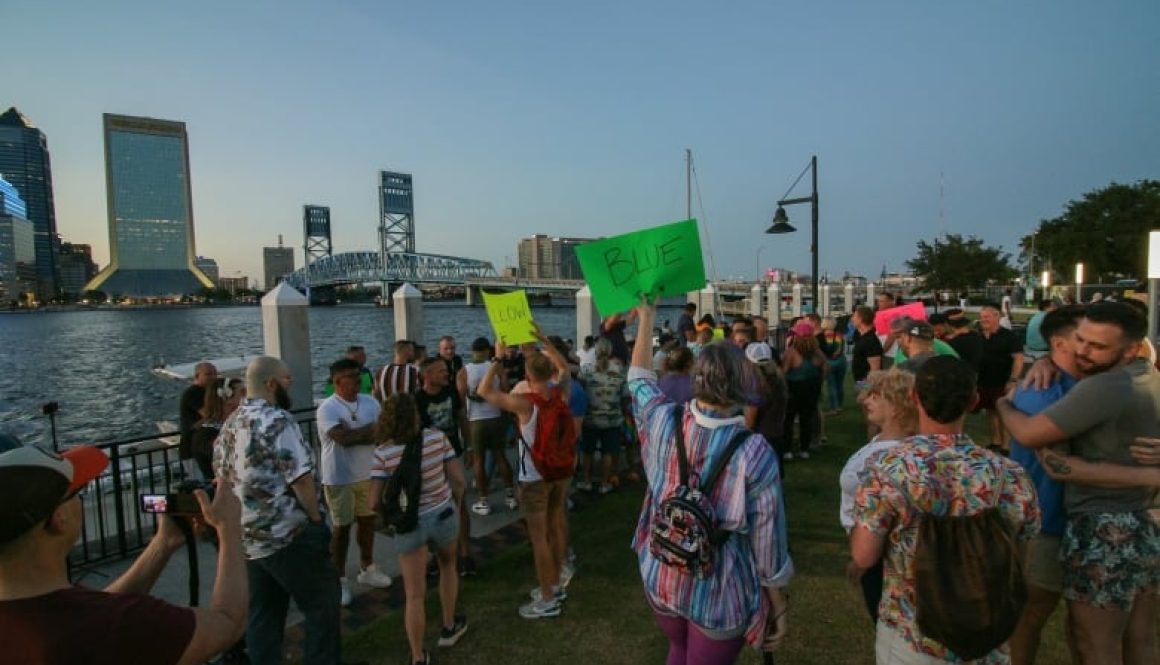
A show of Pride in Florida shines a light on the fight against anti-2SLGBTQ policies
Matt McAllister was dismayed to learn that there would be no display of rainbow lights illuminating the bridge in his home of Jacksonville, Fla., for Pride month this year. For him, it was yet another sign of the state government’s disdain for the 2SLGBTQ community.
Jacksonville’s Acosta bridge, spanning the St. Johns River, is one of many across the state that are only being lit up in red, white and blue from Memorial Day until Labour Day this year.
Florida Department of Transportation Secretary Jared Purdue ordered the all-American light display, to coincide with what Republican Gov. Ron DeSantis declared Freedom Summer — a tax holiday for some recreational activities and supplies — effectively barring all other illuminations for celebrations like Pride month, which began on June 1.
Rather than getting angry, McAllister got creative. On the eve of Pride month, he helped organize a rainbow rebellion of sorts, to create a colourful light display across another nearby bridge in a show of support, solidarity and celebration of the 2SLGBTQ+ community.
“We wanted the first group of so-called Freedom Summer to be LGBTQ+ and to celebrate our diversity and exercise our freedom … since that was taken away from us,” he told CBC News.
For McAllister, it wasn’t an act of protest so much as a demonstration of the community’s resilience in the face of regressive anti-2SLGBTQ+ policymaking. Advocacy groups say Florida is becoming a beacon of resistance as the fight to protect 2SLGBTQ+ rights heats up in a presidential election year.
“It’s been important to tell people that this is not a state battle, it’s a national fight and that they’re all part of it,” said Nadine Smith, executive director of Equality Florida.
WATCH | Why Pride is celebrated in different months:

Pride in Canada isn’t just marked in June — it spans months. The reason is complicated but has a rich history.
Lights in dark times
McAllister, a professor at a local community college, knew a show of visibility was exactly what was needed to respond to yet another slight against the 2SLGBTQ+ community.
“We’ve been, you know, really slapped with one insult after another for the last 18 months here,” he said. “The message seems to be very clear and that is, ‘We don’t want you here.’ ”
Under DeSantis’s leadership, Florida led the charge in trying to enact policies targeting 2SLGBTQ+ people.
They included policies aimed at preventing access to gender-affirming care for young transgender people, limiting discussions and materials about 2SLGBTQ+ issues in schools and trying to ban minors from drag performances.

McAllister said he saw nothing stopping people from taking matters into their own hands.
So, on the night of May 31, about 100 people lined the Main St. Bridge, across from the patriotically-lit Acosta Bridge, and used flashlights covered in coloured plastic gels to create the effect of the rainbow-coloured Pride flag.
It all came together in about 48 hours, and McAllister says the resulting celebration “strengthened our bonds as a community.”
He gave up his own spot on the bridge so others could take part while he looked on from the shore with about 100 spectators.
The joy and defiance of that moment resonated well beyond Jacksonville.
It was “a spectacular middle finger to” the legislators working to erode 2SLGBTQ+ rights, said Maxx Fenning, the executive director PRISM, a youth-led advocacy group in Florida.

He said there is a “new and profound sense of hope” in the state, half way through the year, as legal battles resulted in several anti-2SLGBTQ bills being “either killed or almost entirely declawed.”
Just last week, a federal court judge permanently blocked DeSantis’s ban on gender affirming care for transgender minors, ruling it was unconstitutional.
“We’re taking back our state, piece by piece,” Fenning said.
Fight for rights heads to the ballot box
Though Smith says the “tide is turning,” there’s a bigger battle still on the horizon — the presidential election, which she described as the most consequential vote of her lifetime.
Smith says there’s a “very clear indication” that presumptive Republican presidential nominee Donald Trump would like to “see us dragged backwards on every front” and mimic what DeSantis tried to do in Florida.
If elected, Trump has promised to overturn recently revised federal legislation that would protect students from discrimination based on their sexual orientation and gender identity.
He has also pledged to restrict gender-affirming care for minors and previously told supporters he would ban transgender athletes from competing in women’s and girls’ sports.
Beyond that, the American Civil Liberties Union (ACLU) has warned Trump could use federal legislation to override state and local laws that protect the rights of 2SLGBTQ+ people.
LISTEN | Who is the Canadian psychologist backing anti-trans laws in the U.S.:
Front Burner34:23The Canadian helping U.S states defend anti-trans laws
Meanwhile, policymakers in many other states have pursued a slew of restrictions.
The ACLU has tracked 522 anti-LGBTQ+ bills in 41 states so far in 2024, up from 510 in all of 2023. Many have been defeated, but plenty have advanced through state legislatures or have already become law.
In Florida, Smith says 21 out of 22 bills tabled in the last legislative session have either failed or been “defanged” this year, thanks, in large part, to the success of grassroots activism and public pressure.
But she says it’s at the polling stations this fall where a significant change can be made.
“I think what people are waking up to is, from the top of the ballot down to the school board races, we have to show up.”

A railroad of cells | ScienceDaily
Looking under the microscope, a group of cells slowly moves forward in a line, like a train on the tracks. The cells navigate through complex environments. A new approach by researchers involving the Institute of Science and Technology Austria (ISTA) now shows how they do this and how they interact with each other. The experimental observations and the following mathematical concept are published in Nature Physics.
The majority of the cells in the human body cannot move. Some specific ones, however, can go to different places. For example, in wound healing, cells move through the body to repair damaged tissue. They sometimes travel alone or in different group sizes. Although the process is increasingly understood, little is known about how cells interact while traveling and how they collectively navigate the complex environments found in the body. An interdisciplinary team of theoretical physicists at the Institute of Science and Technology Austria (ISTA) and experimentalists from the University of Mons in Belgium now has new insights.
Much like social dynamics experiments, where understanding the interactions of a small group of people is easier than analyzing an entire society, the scientists studied the traveling behavior of a small group of cells in well-defined in vitro surroundings, i.e. outside a living organism, in a Petri dish equipped with interior features. Based on their findings, they developed a framework of interaction rules, which is now published in Nature Physics.
Cells travel in trains
David Brückner rushes back to his office to grab his laptop. “I think it’s better to show some videos of our experiments,” he says excitedly and presses play. The video shows a Petri dish. Microstripes — one-dimensional lanes guiding cell movement — are printed on the substrate beside a zebrafish scale made up of numerous cells. Special wound-healing cells, known as “keratocytes” start to stretch away from the scale, forming branches into the lanes. “At first, cells stick together through adhesive molecules on their surface — it’s like they’re holding hands,” explains Brückner. Suddenly, the bond breaks off, and the cells assemble into tiny groups, moving forward like trains along tracks. “The length of the train is always different. Sometimes it’s two, sometimes it’s ten. It depends on the initial conditions.”
Eléonore Vercurysse and Sylvain Gabriele from the University of Mons in Belgium observed this phenomenon while investigating keratocytes and their wound-healing features within different geometrical patterns. To help interpret these puzzling observations, they reached out to theoretical physicists David Brückner and Edouard Hannezo at ISTA.
Cells have a steering wheel
“There’s a gradient within each cell that determines where the cell is going. It’s called ‘polarity’ and it’s like the cell’s very own steering wheel,” says Brückner. “Cells communicate their polarity to neighboring cells, allowing them to move in concert.” But how they do so has remained a big puzzle in the field. Brückner and Hannezo started brainstorming. The two scientists developed a mathematical model combining a cell’s polarity, their interactions, and the geometry of their surroundings. They then transferred the framework into computer simulations, which helped them visualize different scenarios.
The first thing the scientists in Austria looked at was the speed of the cell trains. The simulation revealed that the speed of the trains is independent of their length, whether they consist of two or ten cells. “Imagine if the first cell did all the work, dragging the others behind it; the overall performance would decrease,” says Hannezo. “But that’s not the case. Within the trains, all the cells are polarized in the same direction. They are aligned and in sync about their movement and smoothly move forward.” In other words, the trains operate like an all-wheel drive rather than just a front-wheel drive.
As a next step, the theoreticians examined the effects of increasing the width of the lanes and the cell clusters in their simulations. Compared to cells moving in a single file, clusters were much slower. The explanation is quite simple: the more cells are clustered together, the more they bump into each other. These collisions cause them to polarize away from each other and move in opposite directions. The cells are not aligned properly, which disrupts the flow of movement and drastically influences the overall speed. This phenomenon was also observed in the Belgian lab (in vitro experiments).
Dead end? No problem for cell clusters
From an efficiency standpoint, it sounds like moving in clusters is not ideal. However, the model predicted that it also had its benefits when cells navigate through complex terrain, as they do, for instance, in the human body. To test this, the scientists added a dead end, both in the experiments and in the simulations. “Trains of cells get to the dead end quickly, but struggle to change direction. Their polarization is well aligned, and it’s very hard for them to agree on switching around,” says Brückner. “Whereas in the cluster, quite a few cells are already polarized in the other direction, making the change of direction way easier.”
Trains or clusters?
Naturally, the question arises: when do cells move in clusters, and when do they move in trains? The answer is that both scenarios are observed in nature. For example, some developmental processes rely on clusters of cells moving from one side to the other, while others depend on small trains of cells moving independently. “Our model doesn’t only apply to a single process. Instead, it is a broadly applicable framework showing that placing cells in an environment with geometric constraints is highly instructive, as it challenges them and allows us to decipher their interactions with each other,” Hannezo adds.
A small train packed with information
Recent publications by the Hannezo group suggest that cell communication propagates in waves — an interplay between biochemical signals, physical behavior, and motion. The scientists’ new model now provides a physical foundation for these cell-to-cell interactions, possibly aiding in understanding the big picture. Based on this framework, the collaborators can delve deeper into the molecular players involved in this process. According to Brückner, the behaviors revealed by these small cell trains can help us understand large-scale movements, such as those seen in entire tissues.

What is Artificial Intelligence (AI)? Explanation For Complete Beginners. | by Me & Tech | Jun, 2024
Artificial intelligence (AI): When hearing the word Artificial intelligence people often think about platforms that respond to your questions for instance Open-AI’s ChatGPT, Google’s Gemini and many more but AI is more than that, more than responding to your questions. So today we will be seeing some of the features of this field.
- Firstly what is AI itself?
Artificial intelligence(AI): is a broad field of computer science concerned with designing and running intelligent computer systems. When we say intelligence there are two main types of intelligence but wait they are not two, but for now, we will only be seeing two of them. Natural intelligence(NI) is the ability to think, observe, understand, categorise, manipulate and make decisions. This type of intelligence is only for humans. To sum up, the main purpose of AI is to give computers and machines the ability to think, observe, understand, categorise, manipulate and make decisions on their behalf.
- What are the types of AI?
Artificial intelligence(AI) can be categorised depending on its capabilities and functionalities. What are the types of AI based on its capabilities.
- Narrow (Weak) AI: this is the type of AI we mentioned earlier these AI systems are designed to perform specific and simple sets of tasks. Virtual assistants like Siri, Gemini and Alexa are the best examples of Narrow or Weak AI. Even if they don’t perform tasks out of a specific domain they are brilliant systems.
- General (Strong) AI: As we predict from the name these types of systems have the ability to learn, understand and apply intelligence across a wide range of areas, much like humans. General (Strong) AI can perform any task that humans can do. In today’s world, these types of AI systems don’t exist.
- Super AI: An advanced form of AI that can surpass human intelligence in creativity, decision making and different abilities. Super AI is in a stage of fictional theory let alone becoming a reality.
Impacts of space travel on astronauts’ eye health
As space travel becomes more common, it is important to consider the impacts of space flight and altered gravity on the human body. Led by Dr. Ana Diaz Artiles, researchers at Texas A&M University are studying some of those impacts, specifically effects on the eye.
Gravitational changes experienced by astronauts during space travel can cause fluids within the body to shift. This can cause changes to the cardiovascular system, including vessels in and around the eyes.
As the commercialization of space flight becomes more common and individual space travel increases, astronauts will not be the only ones experiencing these changes. Individuals traveling to space with commercial companies may not be as fit or healthy as astronauts, making it even more important to understand the role that fluid shift plays in cardiovascular and eye health.
“When we experience microgravity conditions, we see changes in the cardiovascular system because gravity is not pulling down all these fluids as it typically does on Earth when we are in an upright position,” said Diaz Artiles, an assistant professor in the Department of Aerospace Engineering and a Williams Brothers Construction Company Faculty Fellow. “When we’re upright, a large part of our fluids are stored in our legs, but in microgravity we get a redistribution of fluids into the upper body.”
These fluid shifts may be related to a phenomenon known as Spaceflight Associated Neuro-ocular Syndrome (SANS), which can cause astronauts to experience changes in eye shape and other ocular symptoms, such as changes in ocular perfusion pressure (OPP). At this time, researchers are unsure of the exact cause of SANS, but Diaz Artiles hopes to shed light on the underlying mechanism behind it.
Diaz Artiles and her team are investigating potential countermeasures to help counteract the headward fluid shifts of SANS. In a recent study, they examined the potential aid of lower body negative pressure (LBNP) to combat SANS. This countermeasure has the potential to counteract the effects of microgravity by pooling fluid back into the lower body.
While the role of ocular perfusion pressure in the development of SANS remains undetermined, Diaz Artiles and her team hypothesized that microgravity exposure could lead to a slight but chronic elevation (compared to upright postures) in OPP, which may have a role in the development of SANS. The results of the recently published study showed that lower body negative pressure, while effective in inducing fluid shift toward the lower body, was not an effective method for reducing OPP. Should elevated ocular perfusion pressure be definitively linked to SANS, the use of LBNP could theoretically not be an effective countermeasure to this syndrome. But they emphasize that future work should seek to better understand the relationship between OPP and SANS, and the impact of LBNP on these ocular responses as part of the countermeasure development.
“This research is just one experiment of a three-part study to better understand the effects of fluid shift in the body and its relationship to SANS. Previous experiments in this study included the use of a tilt table for researchers to understand the cardiovascular effects of fluid shifts at different altered gravity levels, recreated by using different tilt angles,” said Diaz Artiles.
The published study, as well as upcoming research, focuses on countermeasures to the fluid shift; in this case, lower body negative pressure. In future studies, the researchers will examine the effects of using a centrifuge to combat the fluid shift and its effects. Diaz Artiles and her team aim to collect cardiovascular responses using each countermeasure and compare effects on ocular perfusion pressure and other cardiovascular functions that may be affected by microgravity environments. These studies are performed on Earth, so gravitational changes that occur in space may cause different outcomes. Thus, they hope to conduct future studies in true microgravity conditions, such as parabolic flights.